In public discourse, what is right and wrong has been based on many things. We often use phrases like “Violation of rights,” “That’s unjust,” or “You’ll be punished” to signal that someone is in the wrong. But why do these words, laws, and commandments move us? It’s often said that our actions define us—but what about the things that motivate those actions? If you’ll indulge me, I’d like to write out my train of thought.
When talking about what one shouldn’t do, we often emphasize the consequences of the action. So, let’s begin with a familiar thought experiment.
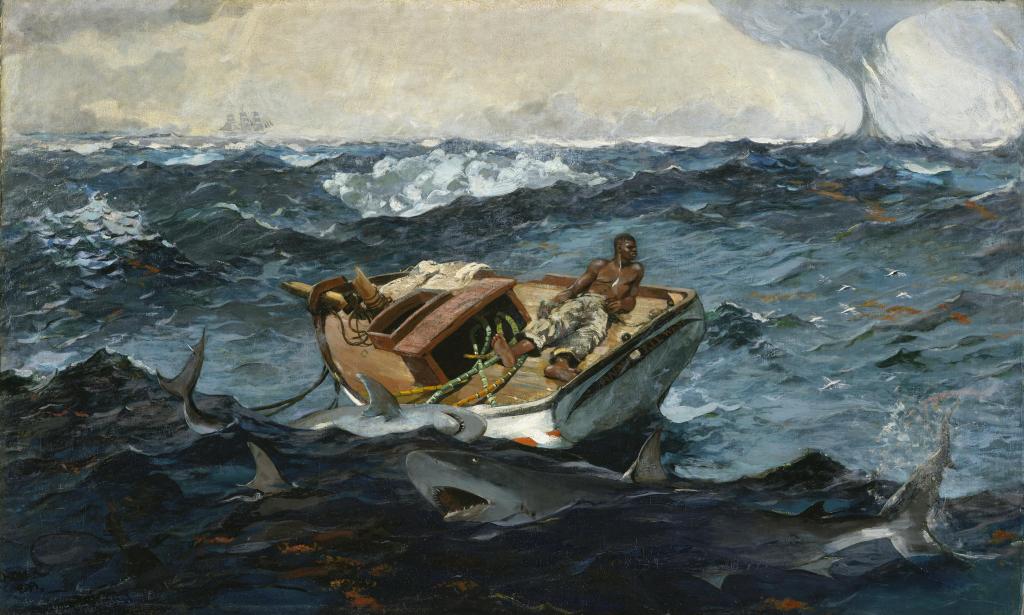
Say you and another person are stranded on a raft adrift in the ocean, with limited food. The murder of your companion could double the amount of time you survive and thus double your chances of reaching shore. Every moment your shipmate remains alive, they consume precious sustenance that could’ve extended your life. If our well-being is our sole motivation—what, then, would make us hesitate?
Since, I’m sure you’d hesitate to kill this imaginary shipmate or even chose not to do so at all. Very well—there must be some other force at play. Perhaps it’s the fact that life is better with others. The joy of fellowship might be what stays our hand. We’d rather die earlier than drift alone.

Let’s change the dilemma slightly. Suppose a miraculous opportunity arises: you can save your friend and get them off the raft—but you’ll be left behind. Your friend doesn’t know about this opportunity, meaning if you choose not to act, it won’t affect your relationship. Would you save them?
If the thought crossed your mind to let them go, then something else is affecting your decision. Perhaps it’s care for your friend’s well-being. We feel deeply for those close to us; if they fall, we fall; when they rise, we cheer. Empathy might just be what’s staying our hand.
Is this care—this empathy—the sole basis for moral decisions? As tempted as I am to say yes… not really. Would you hesitate more if your companion were a stranger or a criminal? Even empathy has its limits—it’s strongest when we’re close to the one we’re saving.
The answer lies in the one thing that has stayed throughout this thought experiment—the hesitancy. There’s always the temptation to push our friend off the raft or to keep them for ourselves. These temptations show that we’re motivated by all the above, and probably more. I haven’t even touched on things like pride, habit, or devotion!
What I do want to emphasize is that we are a bundle of contradictions, pulled in every direction at once. It’s a wonder we make any decisions at all. So, the next time you find yourself in a dilemma, take a step back and ask what’s pulling the strings. It might just give you enough space to decide who you want to be.
 The Thinking Sapling
Leave a comment